BuildWise: Centralizing Construction Knowledge
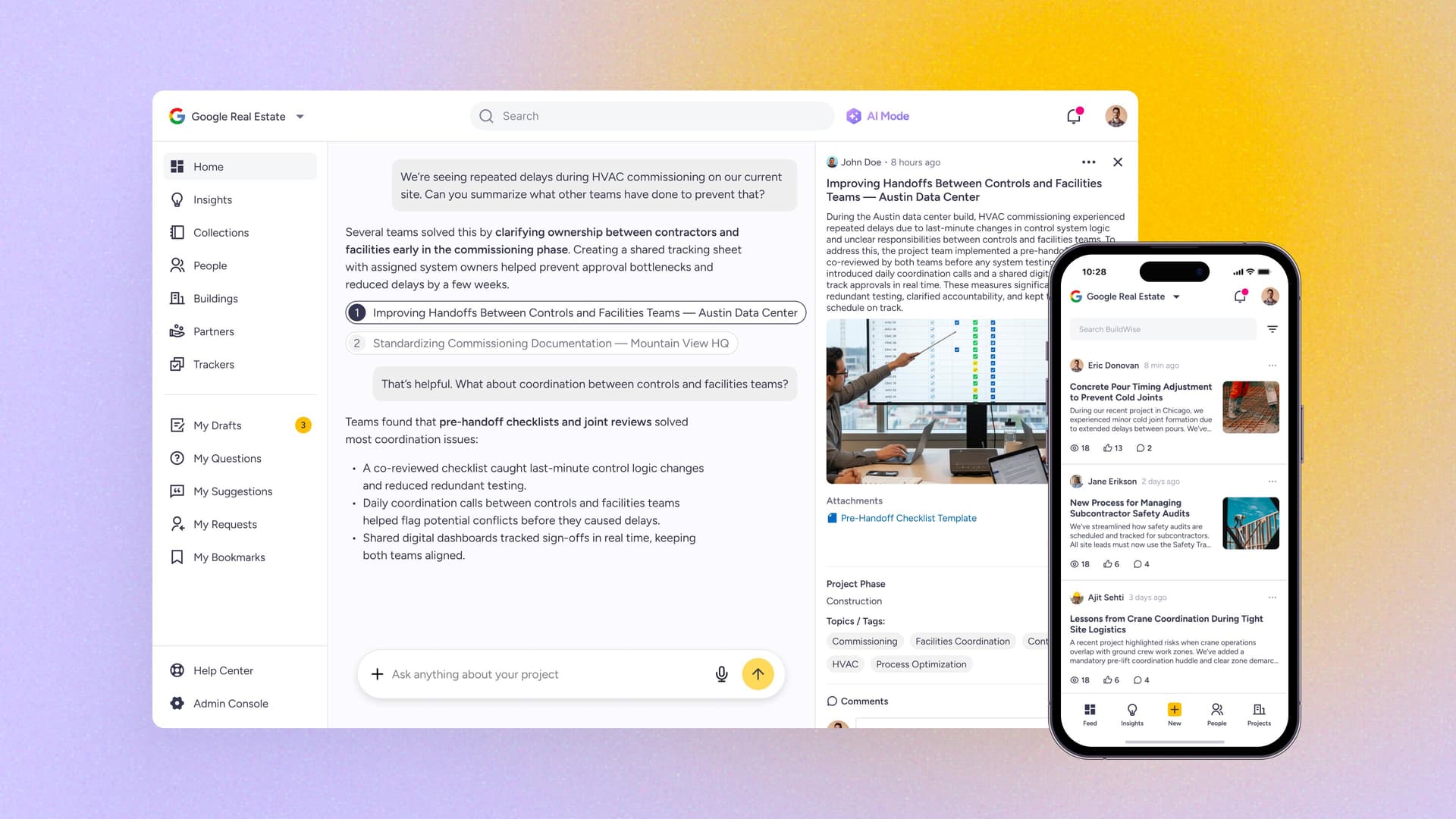
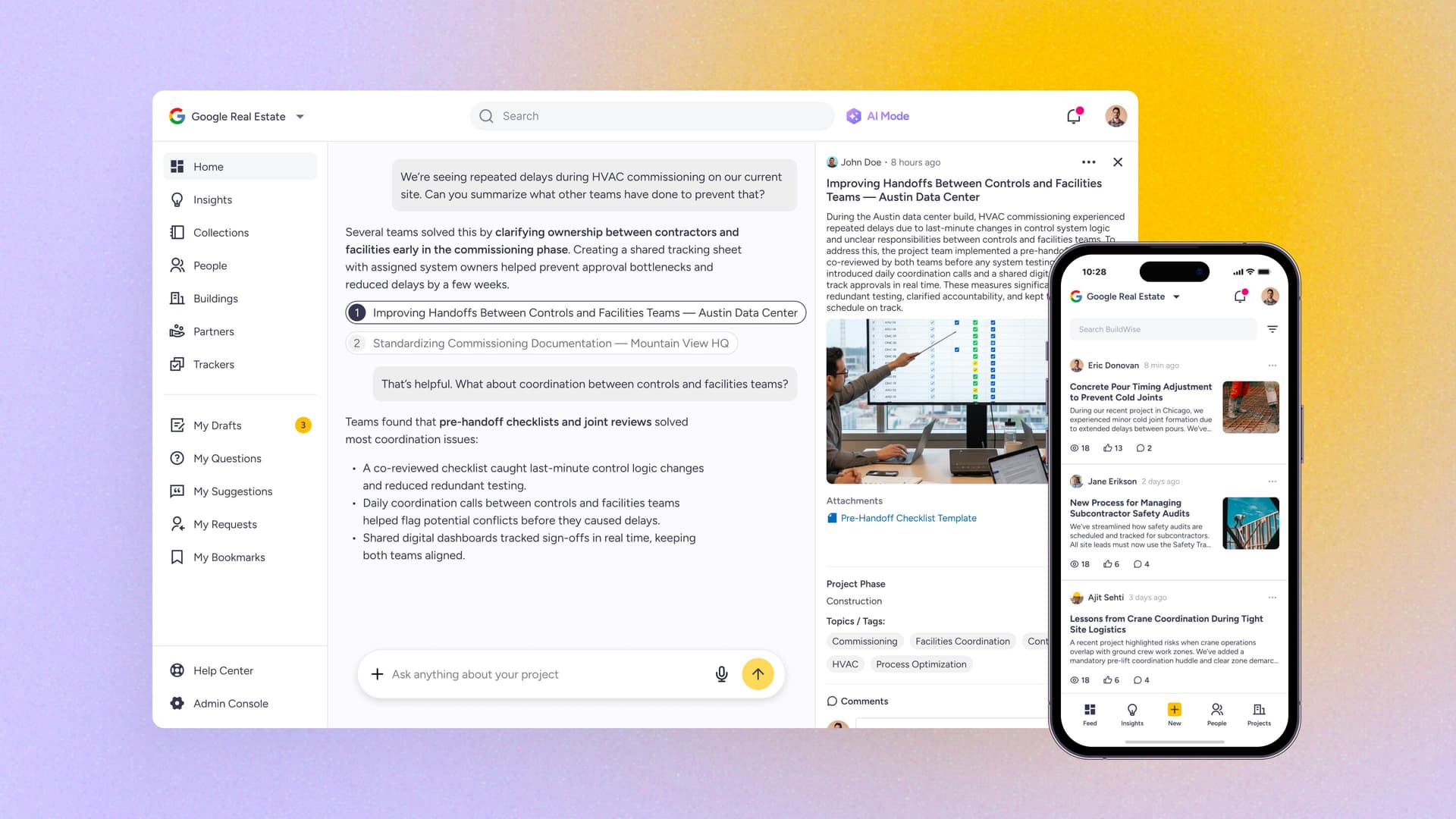
Google's real estate teams managed complex construction projects across multiple campuses, but their institutional knowledge was scattered. Critical insights lived in people's heads, buried in Confluence pages, or lost in email threads. Teams worked in silos with different terminology, making it nearly impossible to find solutions to recurring problems. Process improvement ideas floated around verbally but never got captured or acted upon.
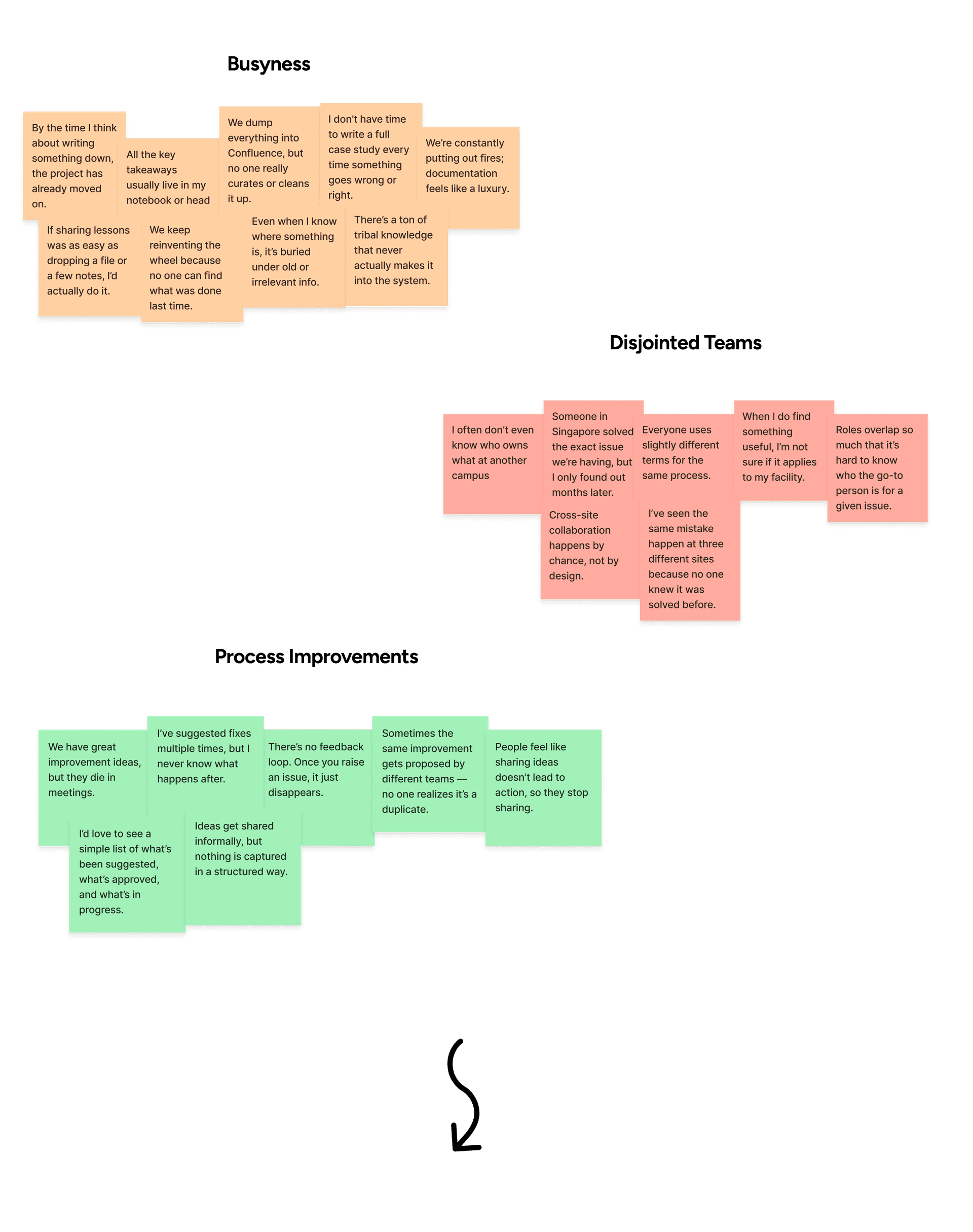
I led a comprehensive user research phase, conducting interviews with project managers, engineers, and facilities teams across multiple campuses. We synthesized pain points and mapped a user flow addressing core needs: content discovery, knowledge capture, and process improvement tracking.
BuildWise addressed these challenges through three integrated features: AI-powered content creation that eliminates writing friction, intelligent search combining keyword and AI capabilities, and a suggestions tracker that operationalizes improvement ideas. The AI-powered content creation feature used natural language processing to help teams quickly document lessons learned and best practices without wrestling with blank pages or complex forms. The dual-mode search system—keyword and AI—was designed to accommodate different user behaviors: users seeking specific known solutions could use keyword search, while those exploring ambiguous problems could leverage semantic AI search to surface relevant insights. The suggestions tracker converted informal feedback into visible, trackable initiatives with ownership and status, closing the feedback loop that had previously left improvement ideas languishing.
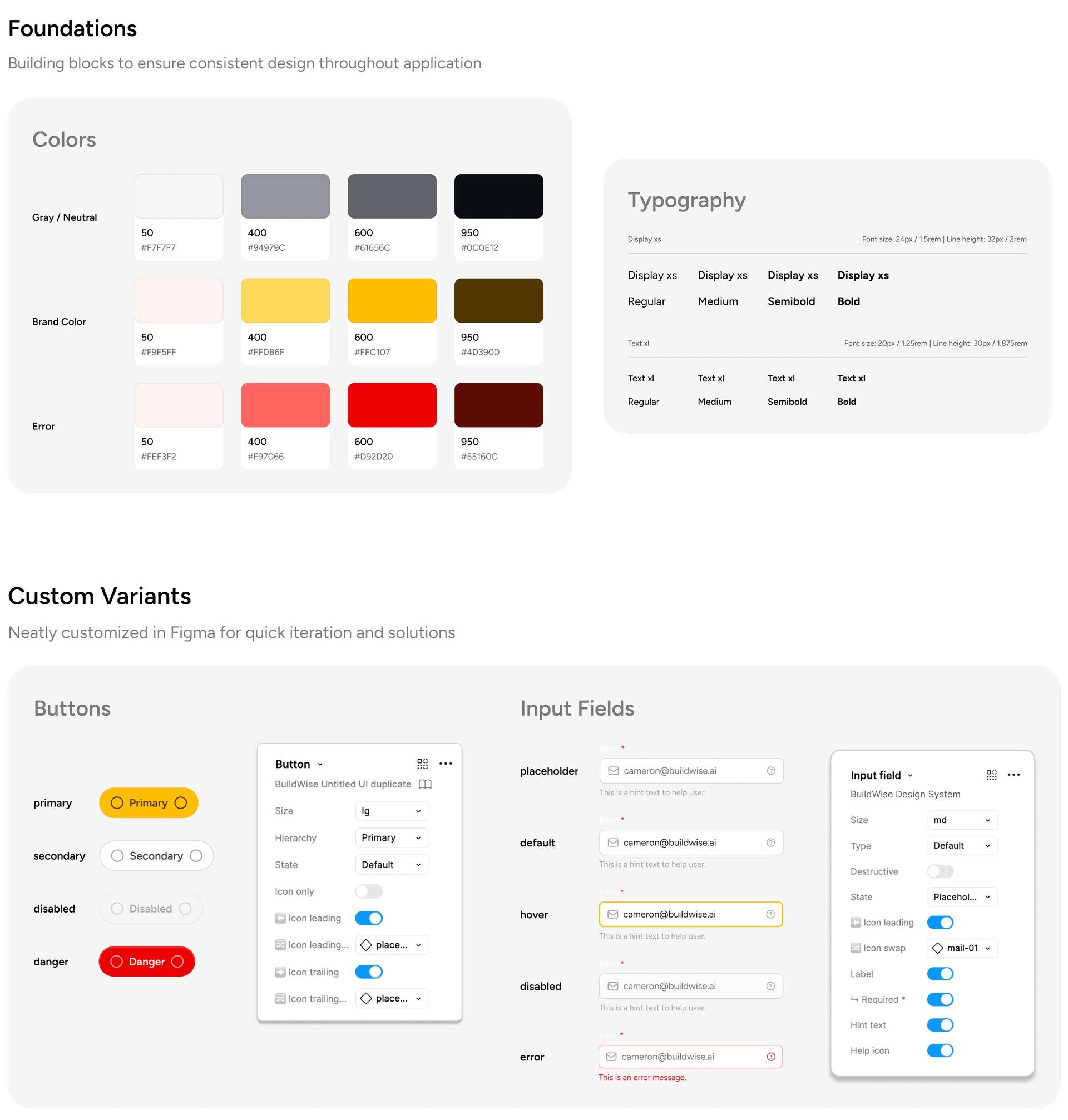
I built a comprehensive design system in Figma from foundations through complex components, ensuring consistency and accelerating development handoff. The system included color palettes, typography scales, and auto-layout components for responsive design.
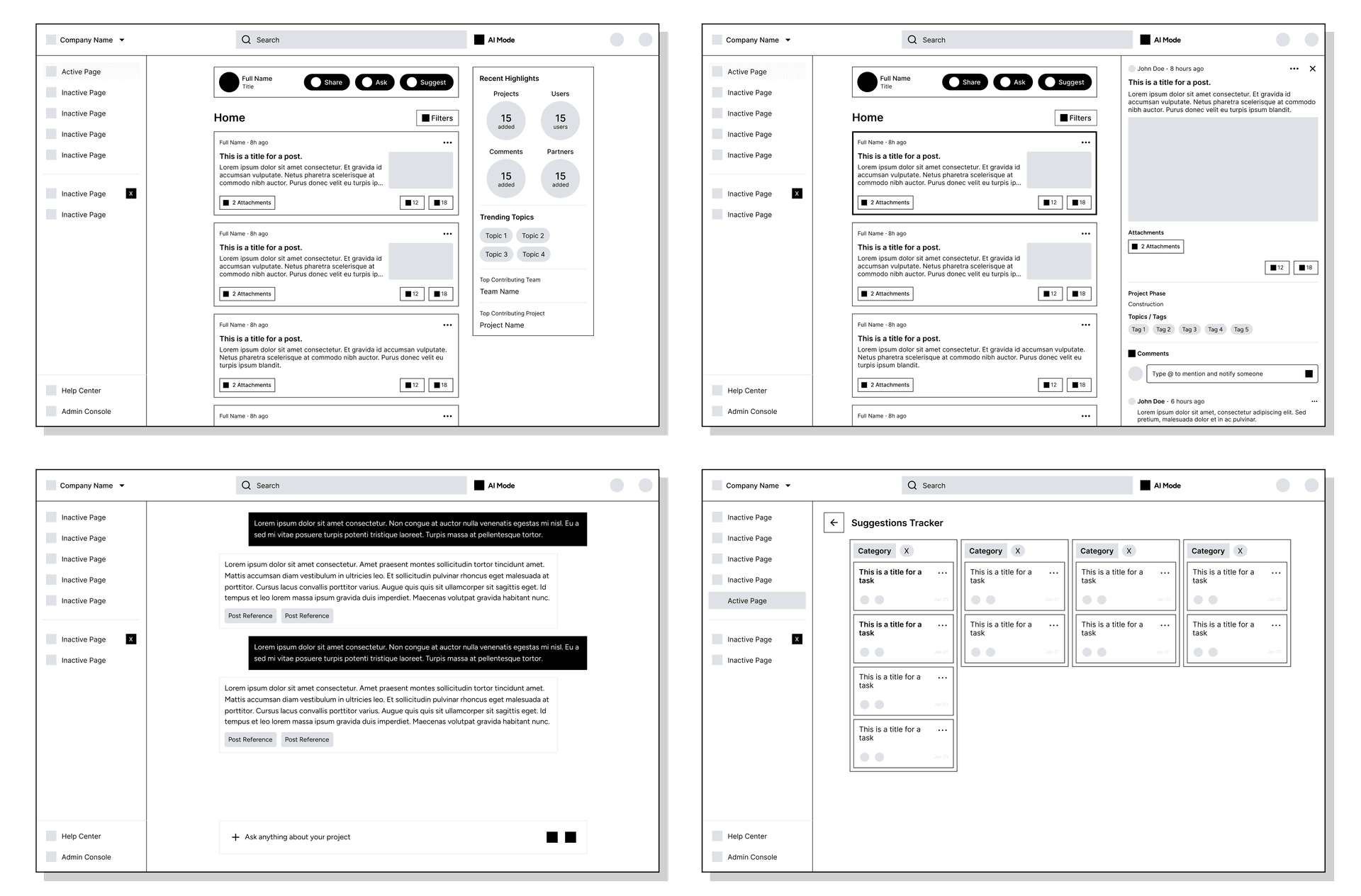
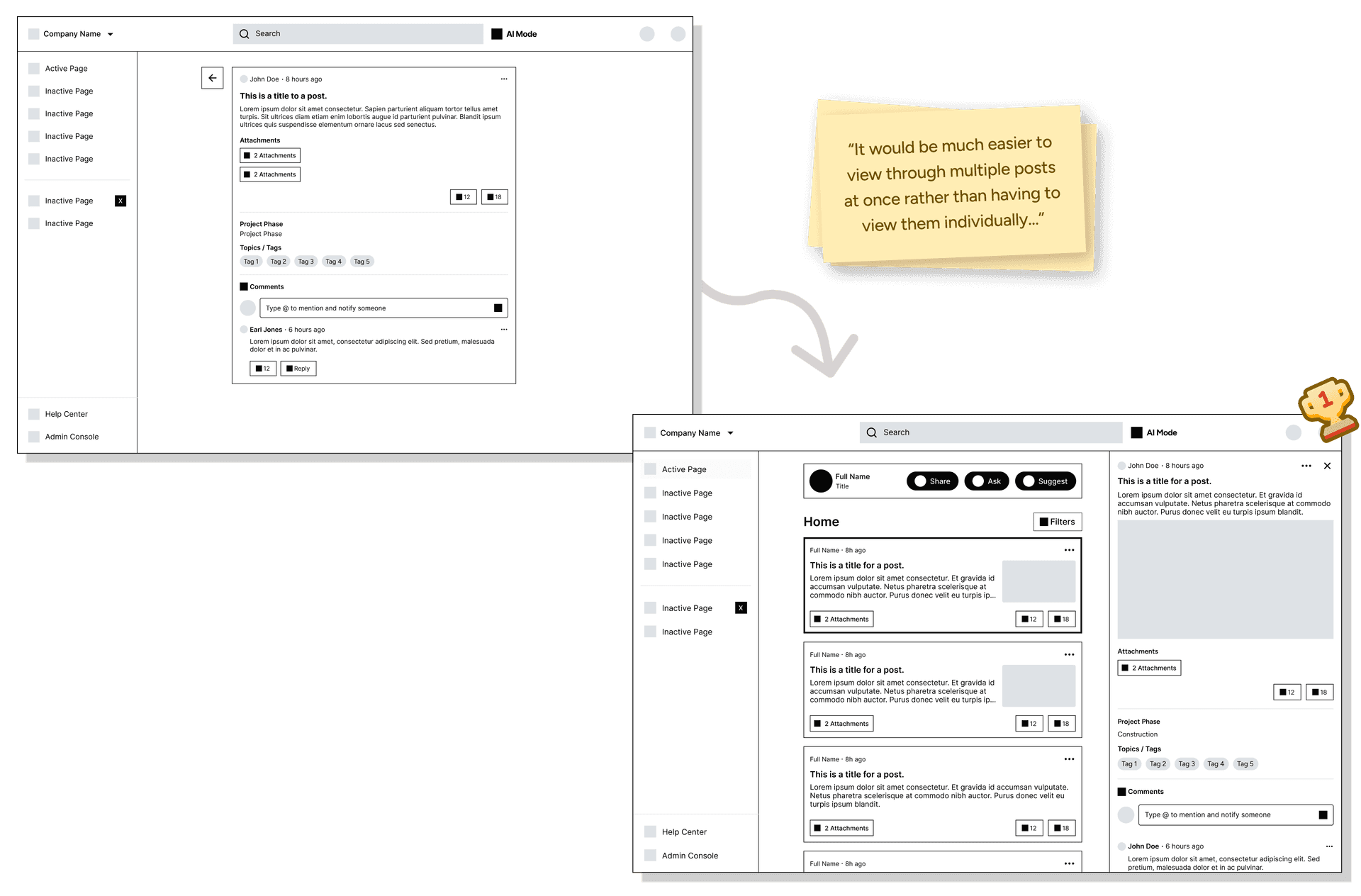
I conducted multiple rounds of wireframe testing with real users before moving to high fidelity. User feedback revealed that users wanted to browse multiple insights simultaneously rather than viewing them individually—a key insight that shaped the final information architecture.
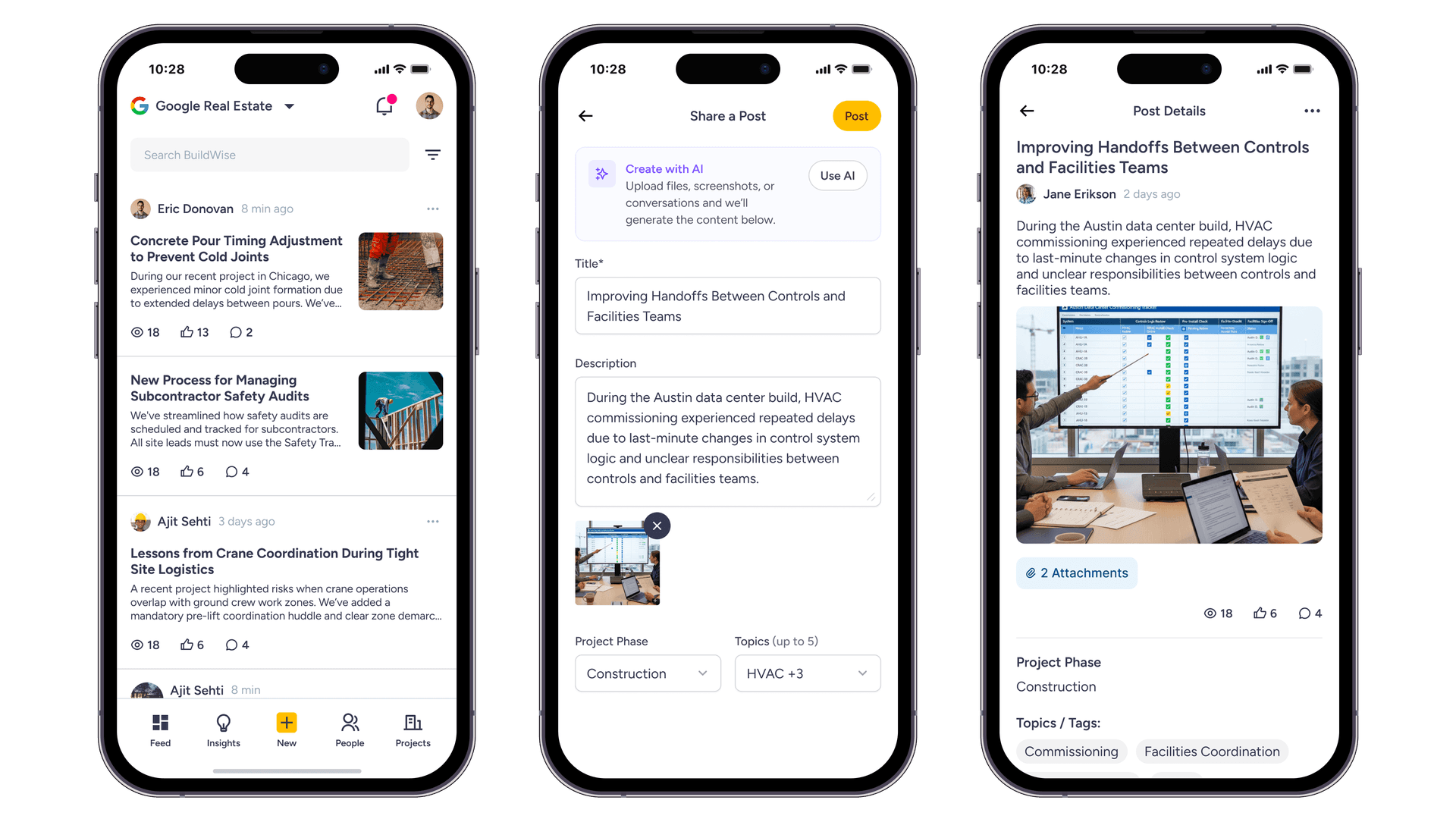
The design started desktop-first to match primary use cases, then expanded to iOS and Android. I followed Apple's Human Interface Guidelines for iOS and Material Design for Android to ensure each platform felt native and intuitive.
After launch, we tracked user behavior across both search modes. Initial data revealed interesting patterns: 68% of users started with keyword search, but nearly half didn't refine their queries or click results. AI search users engaged more deeply but were slower to initiate searches.

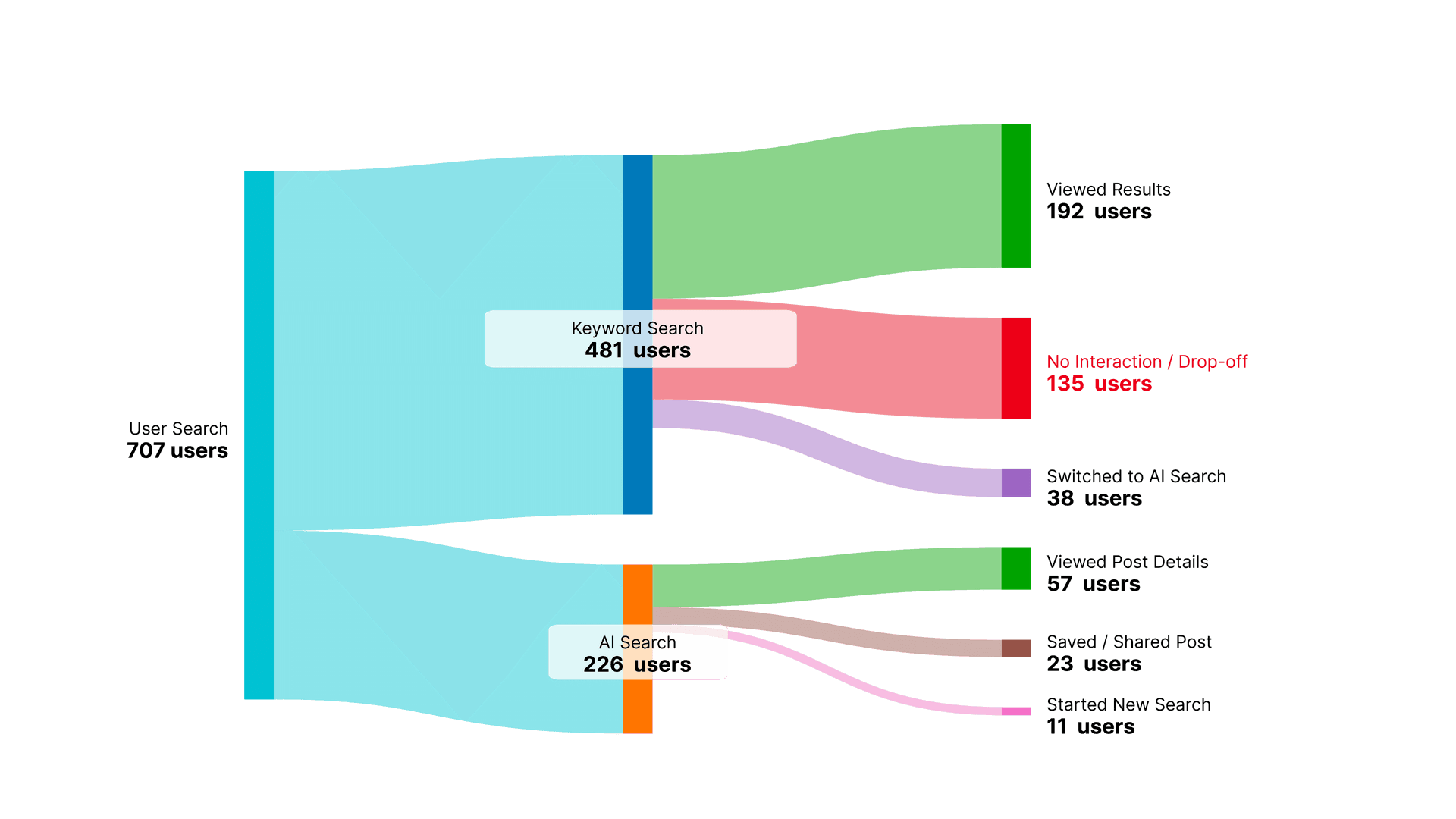
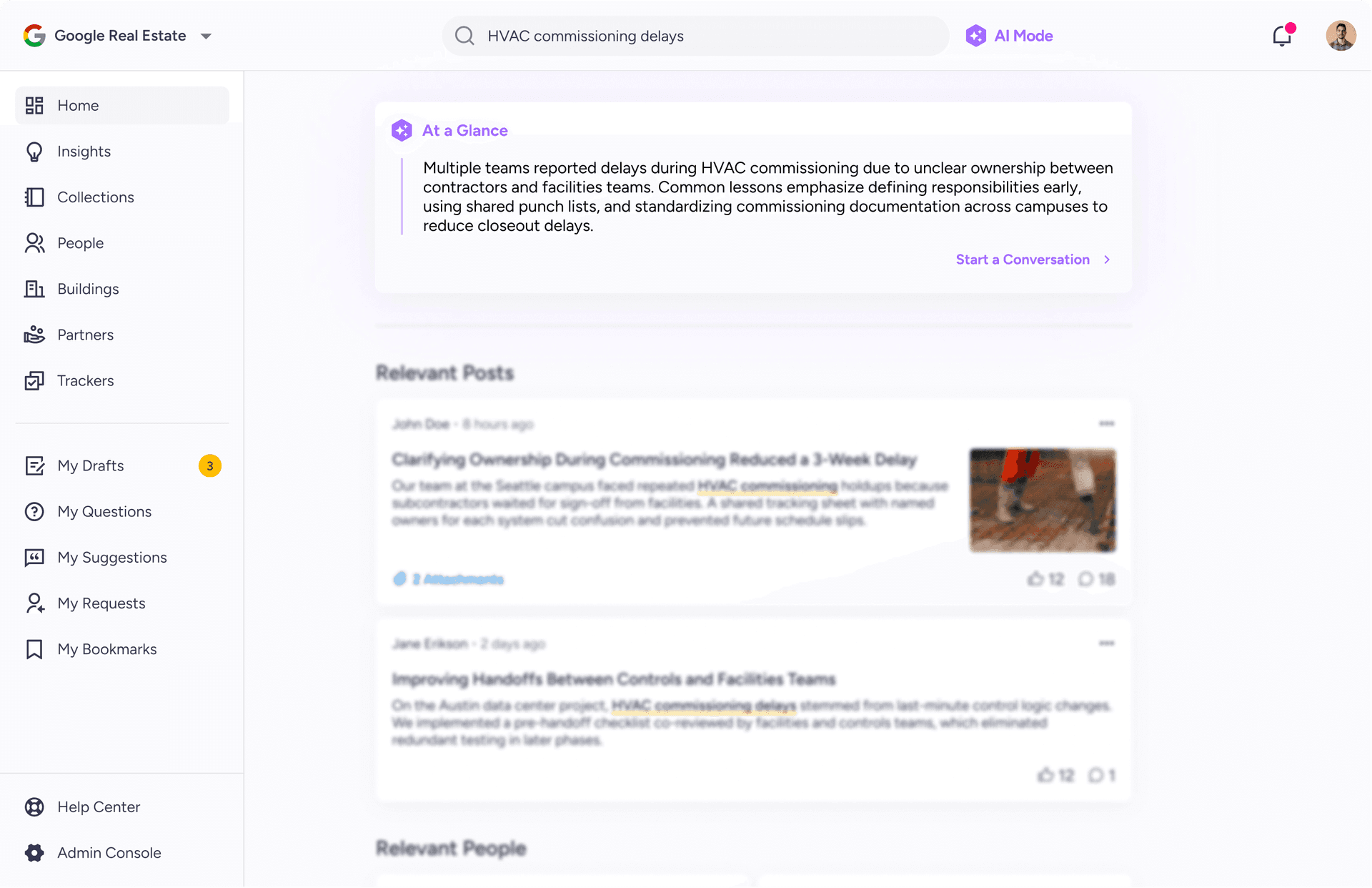
User interviews revealed that people weren't sure what keywords to search for or would rapidly switch between modes. We designed an "At a Glance" module that appears after keyword searches, using query analysis to guide users toward AI search when their intent seems ambiguous.
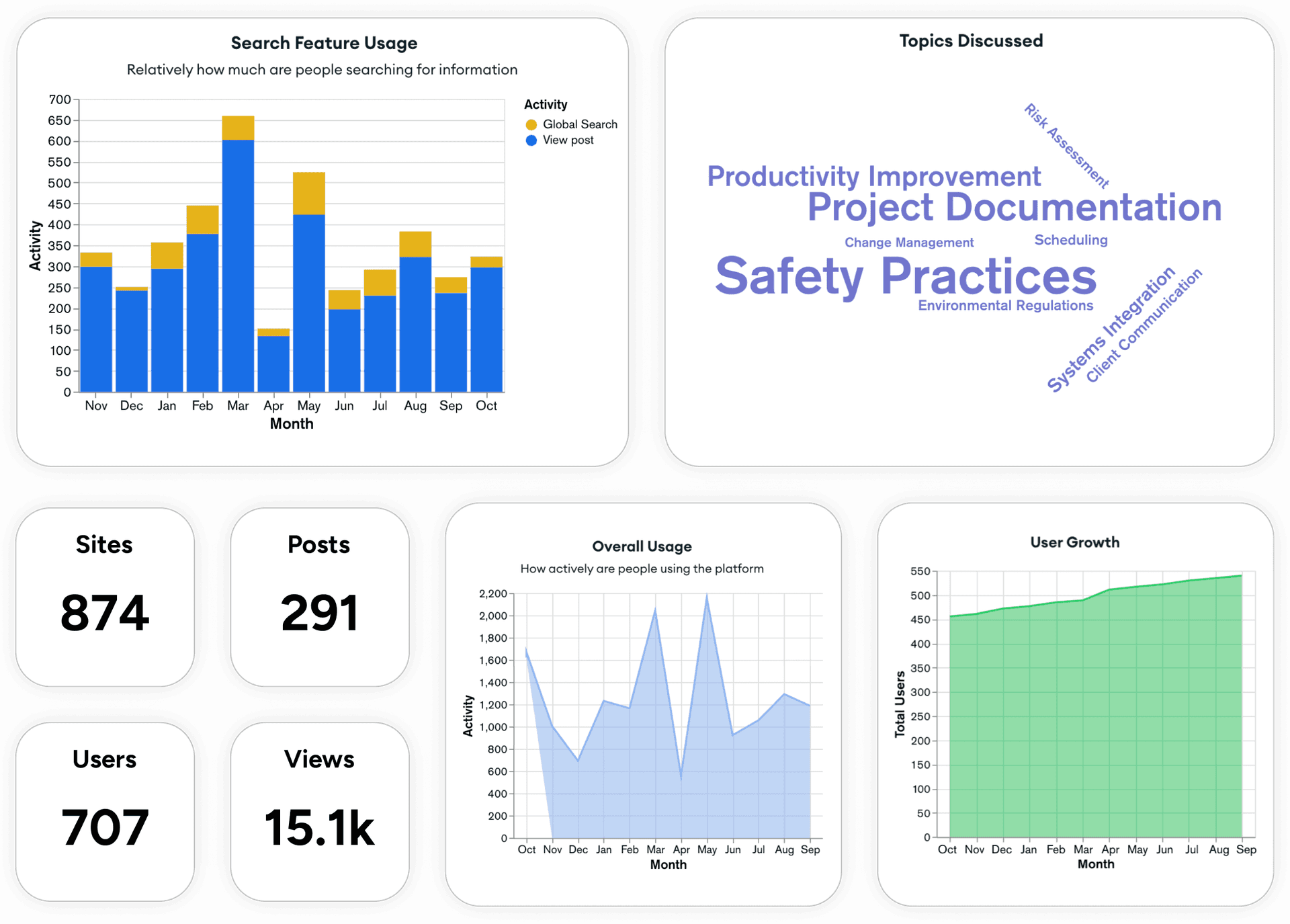
BuildWise enabled teams to work together on captured insights. The suggestions tracker transformed ad-hoc ideas into managed initiatives, while shared dashboards and real-time collaboration ensured cross-campus alignment.
BuildWise successfully centralized knowledge across Google's real estate division, democratizing access to institutional knowledge that previously lived only in specialists' heads and enabling teams to prevent recurring issues.